
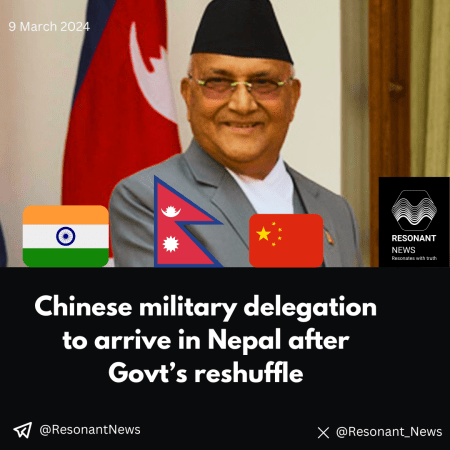

In the wake of a sudden government reshuffle in Nepal, a Chinese military delegation is set to arrive in the country, sparking speculation and raising eyebrows both regionally and internationally. The visit comes hot on the heels of a recent military exercise involving the US Army in Nepal, further adding to the intrigue surrounding Nepal’s geopolitical dynamics.
Following the reshuffle, which saw 16 new ministers, including three Deputy Prime Ministers, assuming office, murmurs of discontent have emerged, particularly from neighboring India. The reshuffle, which saw the ousting of Nepal Congress, a traditional ally of India, reportedly did not sit well with Indian authorities.
Reports suggest that the timing of the Chinese military delegation’s visit, coming immediately after the departure of the US Army following Exercise Shanti Prayas IV, has intensified speculation. While Chinese officials maintain that the visit is routine and primarily focused on potential arms sales, the timing has raised suspicions among observers.
Amidst these developments, rumors have circulated regarding the allegiances of key figures within the Nepalese government. It is speculated that individuals with pro-China leanings played a significant role in negotiating the formation of the new coalition government. This speculation has further fueled concerns in India and the United States, both of whom are closely monitoring the situation.
India, in its official statement, has expressed willingness to collaborate with the new government. However, underlying tensions and suspicions persist, particularly regarding Nepal’s shifting geopolitical alignments. The perceived closeness of certain government figures to China has added a layer of complexity to the situation, with India and the US closely scrutinizing developments.
China, for its part, has downplayed any geopolitical significance to the visit, asserting that it is a routine engagement aimed at exploring potential military cooperation, including the sale of armored personnel carriers. Nevertheless, the timing of the visit, coupled with recent regional developments, has cast a shadow over its purportedly innocuous nature.
The confluence of events – the government reshuffle, the departure of the US military, and the impending arrival of the Chinese delegation – underscores the delicate balance of power and alliances in South Asia. Nepal, traditionally sandwiched between two regional giants, finds itself at the center of geopolitical maneuvering, with each move closely watched and analyzed by its neighbors and international stakeholders alike.
As Nepal navigates this complex landscape, the implications of its decisions extend far beyond its borders. The visit of the Chinese military delegation serves as a stark reminder of the intricate web of alliances and rivalries that define the region, leaving observers pondering the broader implications for regional stability and security.

Leave a Reply