
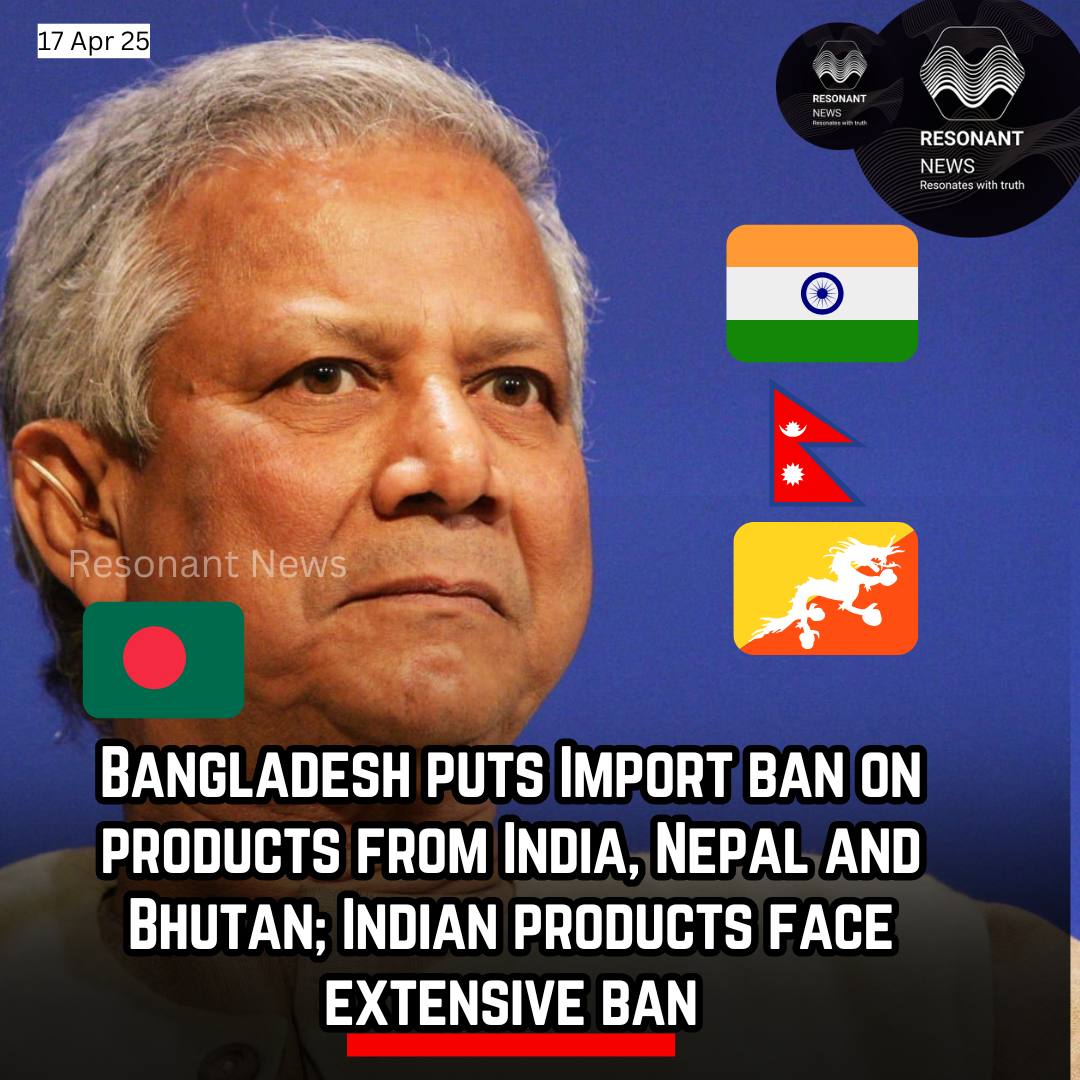

The National Board of Revenue (NBR) of Bangladesh has implemented an immediate import ban on a wide range of goods from India, Nepal, and Bhutan, a move that is set to significantly impact regional trade dynamics. The directive, issued by the Customs Wing of the NBR, specifies that only yarn and potatoes from Nepal and Bhutan will be exempt from the ban, allowing their import to continue. For India, however, the restrictions are far more extensive, targeting a broad array of products critical to its export market.
Bangladesh’s interim regime last month decided to close three land ports with India while suspending another citing lack of necessary infrastructure for operations. Bangladesh halted yarn imports from India via land ports, which Bangladesh garment exporters have termed as ‘suicidal’. The decision was taken despite vehement opposition by leading business chambers in Bangladesh.
The new notification says that the banned Indian goods include duplex board, newsprint, kraft paper, cigarette paper, fish, yarn, potatoes, powdered milk, tobacco, radio and TV parts, bicycle and motor parts, Formica sheets, ceramicware, sanitaryware, stainless steelware, marble slabs and tiles, and mixed fabrics. This sweeping prohibition, effective as of April 2025, marks a significant escalation in trade restrictions by Bangladesh, one of India’s key trading partners in Indian subcontinent.
Bangladesh is one of India’s largest trading partners in the region, with bilateral trade valued at approximately $14 billion in 2023-24. India exports a diverse range of goods to Bangladesh, including many of the now-banned items like textiles, ceramics, and paper products. In 2023, India exported over $2 billion worth of textile products to Bangladesh, including raw materials used in its garment industry. The restriction will disrupt supply chains for Bangladeshi manufacturers, potentially leading them to source from other countries like China or Vietnam.
Products like duplex board, newsprint, kraft paper, and cigarette paper are essential for Bangladesh’s printing, packaging, and tobacco industries. The ban on ceramicware, sanitaryware, stainless steelware, marble slabs, and tiles will affect India’s construction and home goods sectors. These industries have seen steady demand from Bangladesh due to its rapid urbanization and infrastructure development. The loss of this market could lead to oversupply in India, depressing prices and affecting profitability. Fish exports, particularly from coastal states like Andhra Pradesh and West Bengal, have been a growing segment, with Bangladesh importing significant quantities for domestic consumption.
The ban on bicycle and motor parts, as well as radio and TV parts, will disrupt Bangladesh’s manufacturing sector, which relies on Indian components for assembly. While this may hurt Bangladesh in the short term, Indian suppliers will lose a steady revenue stream, and Bangladeshi manufacturers may turn to alternative suppliers, reducing India’s long-term influence in these industries. The ban also affects Nepal and Bhutan, but the exemptions for yarn and potatoes from these countries indicate a more lenient approach. For India, the extensive list of banned products suggests a targeted effort to reduce dependence on Indian goods, possibly as a response to domestic economic pressures or a push for self-reliance in Bangladesh. This could strain India-Bangladesh relations, particularly if India responds with retaliatory measures, further complicating regional trade under frameworks like the South Asian Free Trade Area (SAFTA).


Leave a Reply