
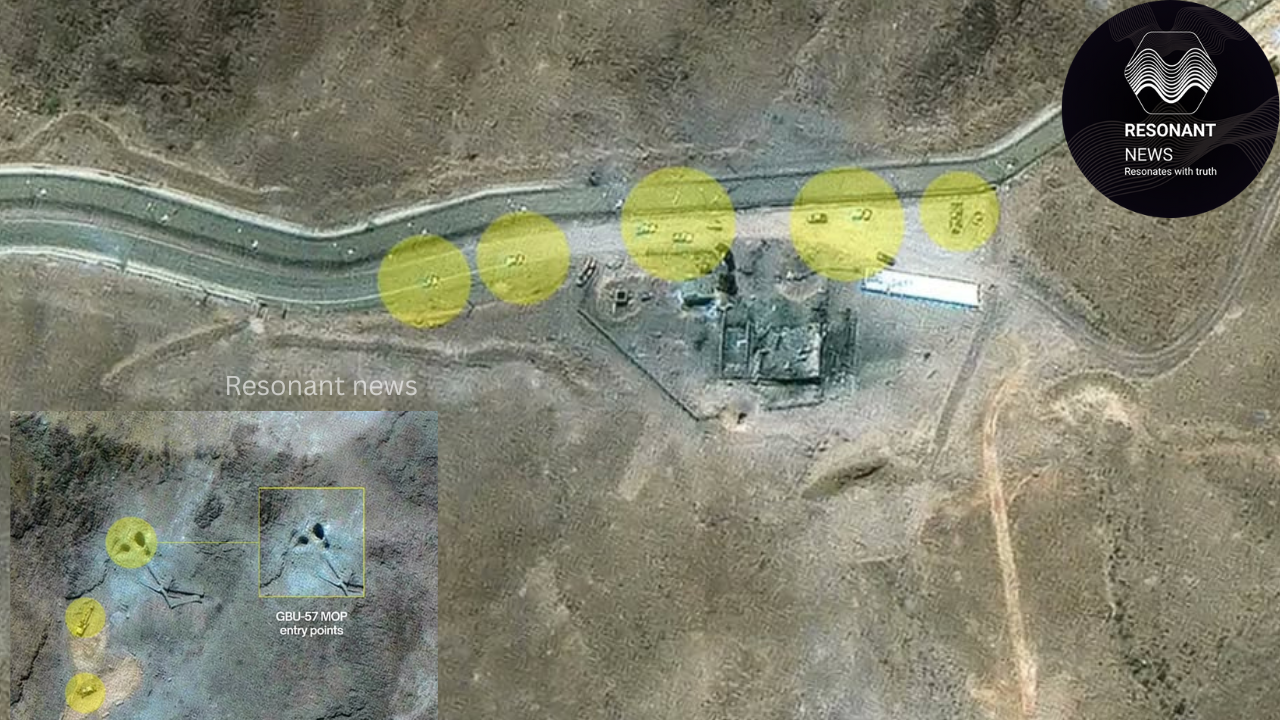

New satellite imagery from Maxar Technologies, captured just five days after a U.S. airstrike, shows significant construction activity at Iran’s Fordow uranium enrichment facility. The underground nuclear bunker, located near Qom, was targeted by American B-2 bombers deploying 30,000-pound GBU-57 bunker-buster bombs. The images, taken in late June 2025, depict Iranian construction crews working diligently to repair the damage caused by the attack.
The photos reveal excavators, bulldozers, and other heavy machinery in operation around the site. Crews are focused on repairing craters and breaches in the ground caused by the massive bombs, rebuilding access roads, and clearing debris from the area surrounding the facility. The scale of the effort shows Iran’s urgency to restore functionality to the heavily fortified site, which has been a cornerstone of its nuclear program.
The satellite imagery also indicates that materials or equipment are being transported from Fordow to a location approximately half a mile away. While the nature of the cargo remains unclear, the movement suggests Iran may be relocating critical components or resources, possibly to safeguard them or to continue operations elsewhere. Similar surface-level activity was observed in the 24 hours leading up to the U.S. strike, hinting at preemptive measures by Iranian authorities.
Despite the intensity of the bombardment, the International Atomic Energy Agency (IAEA) has confirmed that no nuclear contamination resulted from the attack. IAEA Director General Rafael Grossi, in an interview with Radio France Internationale, stated that Fordow’s centrifuges are no longer operational and that the facility has sustained “enormous damage.” The absence of contamination is a significant relief, given the site’s role in enriching uranium, which has long raised concerns about Iran’s nuclear ambitions.
The Fordow facility, built deep within a mountain to protect it from aerial attacks, has been a focal point of international scrutiny due to its role in Iran’s nuclear program. The U.S. airstrike, conducted in June 2025, aimed to disrupt Iran’s uranium enrichment capabilities amid heightened tensions over its nuclear activities. The use of GBU-57 bombs, designed to penetrate deeply buried targets, reflects the strategic importance of neutralizing Fordow.
The rapid reconstruction efforts suggest Iran’s determination to maintain its nuclear infrastructure despite international pressure. The movement of materials and the scale of the repair operations raise questions about Iran’s next steps and whether it intends to resume enrichment activities at Fordow or elsewhere.
The U.S. strike and Iran’s swift response highlight the ongoing challenges in addressing Iran’s nuclear program. The IAEA’s assessment of “enormous damage” indicates a significant setback for Fordow’s operations, but Iran’s construction activity suggests resilience and adaptability. The international community, led by the IAEA, continues to monitor the situation closely, with Grossi emphasizing the need for transparency and inspections to ensure compliance with nuclear agreements.
As tensions between the U.S. and Iran persist, the developments at Fordow underscore the delicate balance of diplomacy and military action in preventing nuclear proliferation. The satellite images serve as a stark reminder of the stakes involved, as Iran seeks to rebuild and the world watches closely for signs of escalation.

Leave a Reply