
Transcript of the video:
I’m sure by now most of you know that Venezuela has the world’s largest proven oil reserves—about 303 billion barrels, which constitute roughly 17% of the global total. But did you know that Nicolás Maduro, Venezuela’s president, had a $50 million bounty on his head—double the amount once placed on Osama bin Laden and Saddam Hussein? Did you also know that Venezuela’s current oil production is lower than it was during World War II?
In a dramatic operation called “Absolute Resolve,” Nicolás Maduro has been captured by U.S. forces and arrested on charges including drug trafficking. His ties to the Tren de Aragua gang are well-documented. Something similar happened in Panama in the late 1980s, when about 27,000 U.S. troops were deployed to remove Manuel Noriega. That incident is connected to what’s happening in Venezuela right now.
In this video, I’ll explain how Venezuela reached this point, why the U.S. carried out this operation, who is impacted, how India views it, and what lies ahead. Don’t expect diplomacy here—I have no sympathy for Nicolás Maduro.
Hello, everyone. Welcome to Reviews. I’m Lavina. It was the Obama administration that first declared Venezuela a national security threat to the U.S. This means both Democrats and Republicans have long seen it as a problem. After Hugo Chávez, Maduro’s predecessor, relations worsened. Maduro has been accused of ties to cartels and facilitating drug shipments to the U.S.—accusations that are true to some extent, but there’s more to the story.
The Obama-era declaration matters because it signaled that the U.S. would intervene if Maduro remained in power. Let’s start with Hugo Chávez, who led a failed coup in the early 1990s and was imprisoned. At that time, Venezuela had strong ties with the U.S. Its heavy, sulfur-rich crude relied on American refineries for processing, and foreign companies operated profitably there. But corruption was rampant—Venezuela is now the world’s third-most corrupt country, a legacy of leaders like Chávez, Maduro, and those before them.
Economic collapses and currency devaluation have driven millions of refugees from Venezuela, straining neighboring countries. Chávez came to power in 1998 promising economic change and reduced corruption. Initially, things improved, but he failed to deliver. His era ended with his death in 2013, and his ally Maduro took over. Maduro became notorious for brutally suppressing opposition, as seen in the 2018 and 2024 elections.
In 2024, Maduro tried to seize part of Guyana’s sea-facing territory—Essequibo—which borders Venezuela and supplies oil to the U.S. This move alarmed America. Tensions with Trump were already high during his first term, with U.S. economic warfare against Maduro. Biden eased some sanctions and sought dialogue, but the 2024 election showed Maduro’s autocratic intentions.
The opposition candidate, Edmundo González, claimed a landslide victory, but Maduro declared himself the winner and forced González into exile in Spain. Maduro lost support from most Western nations, Japan, South Korea, the U.S., and the UK. Russia, Iran, China, and Cuba stepped in—Russia and Iran provided military aid, China bought most of Venezuela’s oil, and Cuba offered intelligence support.
The U.S. opposes foreign influence—especially Russian and Chinese—in Latin America. One of Venezuela’s key partners is Iran, tied by oil diplomacy, anti-imperialism, and sanctions evasion. Both are OPEC members and collaborate on energy projects. Surprisingly, Hezbollah has a base in Venezuela, involved in money laundering, drug trafficking, and intelligence—adding to U.S. concerns about Iran, China, and Russia gaining ground in a country that once had strong U.S. ties.
For India, Venezuela has historically been a good partner, mainly for oil supplies. Relations peaked around 2018–2020. Chávez visited India in the 2000s. But U.S. sanctions in 2020–2022 forced India to reduce imports. Indian companies like ONGC remain invested there, and we import heavy crude suited to our refineries. Imports rebounded in 2023–2025, reaching about $2 billion at times—making India one of Venezuela’s largest buyers.
Now, with Maduro’s capture, India must be cautious. Any new government in Venezuela will likely maintain good relations with India, though it may hurt China, Russia, and Iran. China is the most affected—its envoy was meeting Maduro just before the capture to discuss evading U.S. sanctions. China buys about 10% of its oil from Venezuela and supports its Belt and Road Initiative. Since 2007, China has loaned Venezuela around $60 billion, repaid partly through oil.
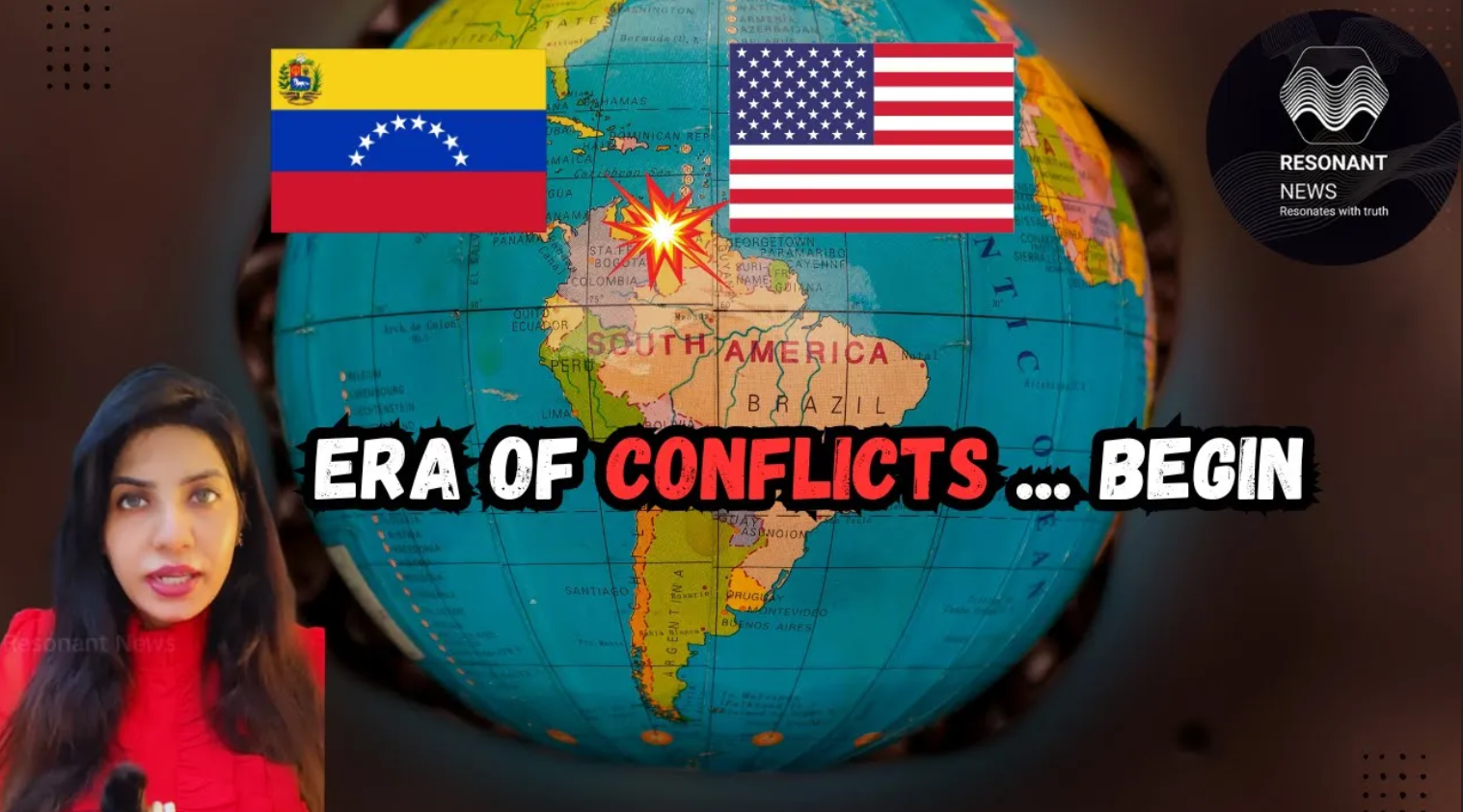
China’s influence in Latin America worries the U.S., especially in its backyard. India won’t suffer—any post-Maduro government will continue selling oil to us. Watch my September 2024 video for more on China’s challenges by 2027. The U.S. will pressure China’s allies, including Venezuela, while China counters. We’re entering an era of conflict, but India can expand where China’s footprint shrinks.
Countries’ fates are unpredictable—look at Afghanistan and now Venezuela. Have a great day ahead. Thank you for watching—subscribe, like, and share!


Leave a Reply