
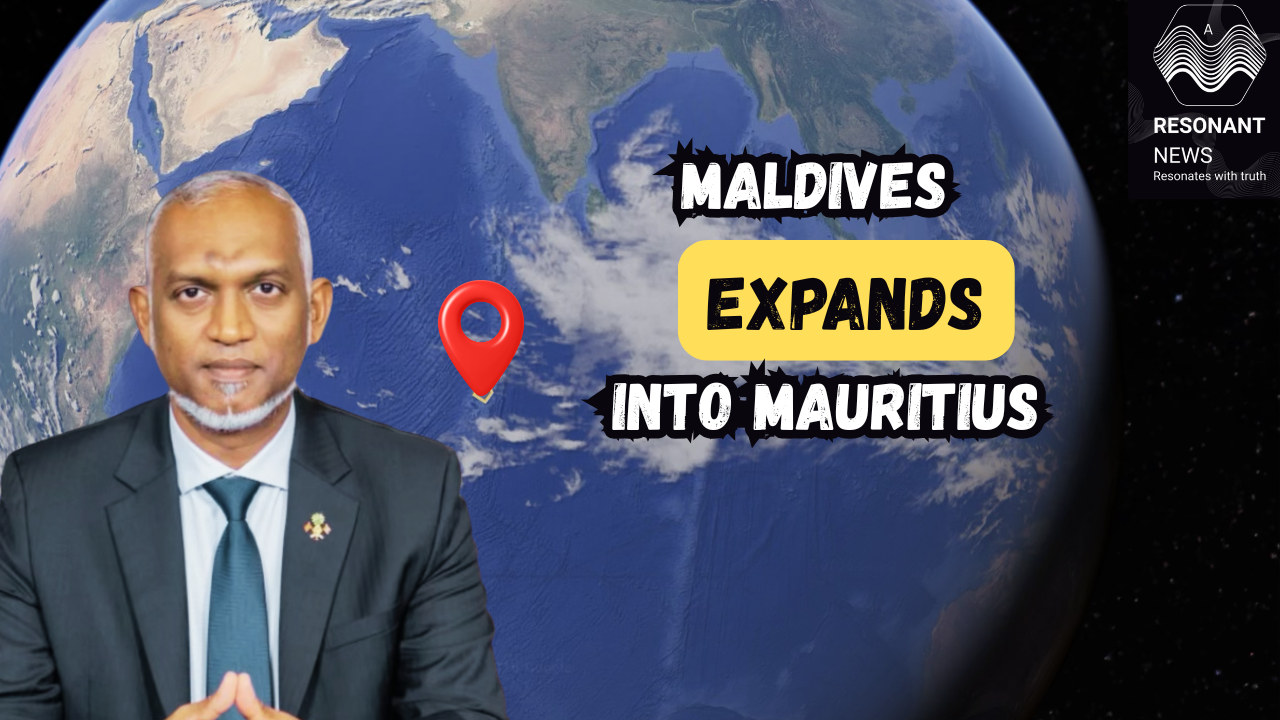

In a dramatic escalation of a long-running maritime dispute, the Maldives has openly rejected a 2023 ruling by the International Tribunal for the Law of the Sea (ITLOS) and asserted operational control over waters in the northern part of the Chagos Archipelago region in the Indian Ocean.
On February 5, 2026, President Mohamed Muizzu addressed the Maldivian parliament and declared that his government would no longer recognize the maritime boundary line established by the ITLOS decision. That ruling had divided the overlapping 200-nautical-mile Exclusive Economic Zones (EEZs) between the Maldives and Mauritius, allocating roughly 47,232 square kilometers to the Maldives and 45,331 square kilometers to Mauritius in relation to the Chagos Archipelago. Muizzu stated unequivocally that the Maldives possesses a stronger historical, geographical, and legal claim to the Chagos Islands—referred to locally as Foalhavahi—and the surrounding maritime area.
In a significant policy reversal, the president formally revoked a 2022 diplomatic letter sent by the previous administration under President Ibrahim Mohamed Solih, which had expressed support for Mauritius’ sovereignty over the Chagos Archipelago. This move aligns with Muizzu’s earlier campaign promises to reclaim what the Maldives considers its rightful maritime territory and marks a clear shift away from the more conciliatory stance of his predecessor.
Almost immediately after the announcement, the Maldives National Defence Force (MNDF) moved to enforce the new position. The MNDF Coast Guard vessel Dharumavantha, supported by Air Corps drones, was deployed to patrol the disputed 200-nautical-mile zone in what officials described as a routine surveillance and protection mission over the southern Special Economic Zone. The first enforcement action came swiftly: MNDF personnel intercepted two Sri Lankan fishing vessels operating approximately 104 nautical miles off Gan Island in Addu Atoll, demonstrating the Maldives’ determination to exercise authority in the contested waters.
The government has framed the deployment as part of its statutory responsibility to safeguard the Exclusive Economic Zone. Officials have indicated that legislative amendments will soon be proposed to formally reaffirm the 200-nautical-mile zone as sovereign Maldivian territory under domestic law.
The decision unfolds against the backdrop of broader regional developments, including the 2025 agreement between the United Kingdom and Mauritius that transferred sovereignty of the Chagos Archipelago to Mauritius while granting the UK a 99-year lease over the strategic Diego Garcia island to preserve the joint US-UK military base. The Maldives has previously lodged formal objections with the UK—in November 2024 and again in January 2026—and has initiated separate legal proceedings aimed at recovering the disputed maritime area.
By taking direct operational control and deploying military assets, the Maldives has significantly raised the stakes in the Indian Ocean dispute, challenging both the ITLOS ruling and the UK-Mauritius arrangement. The move has heightened tensions in the region and raised questions about future compliance with international maritime law as well as potential consequences for stability in one of the world’s most strategically important waterways.

Leave a Reply