
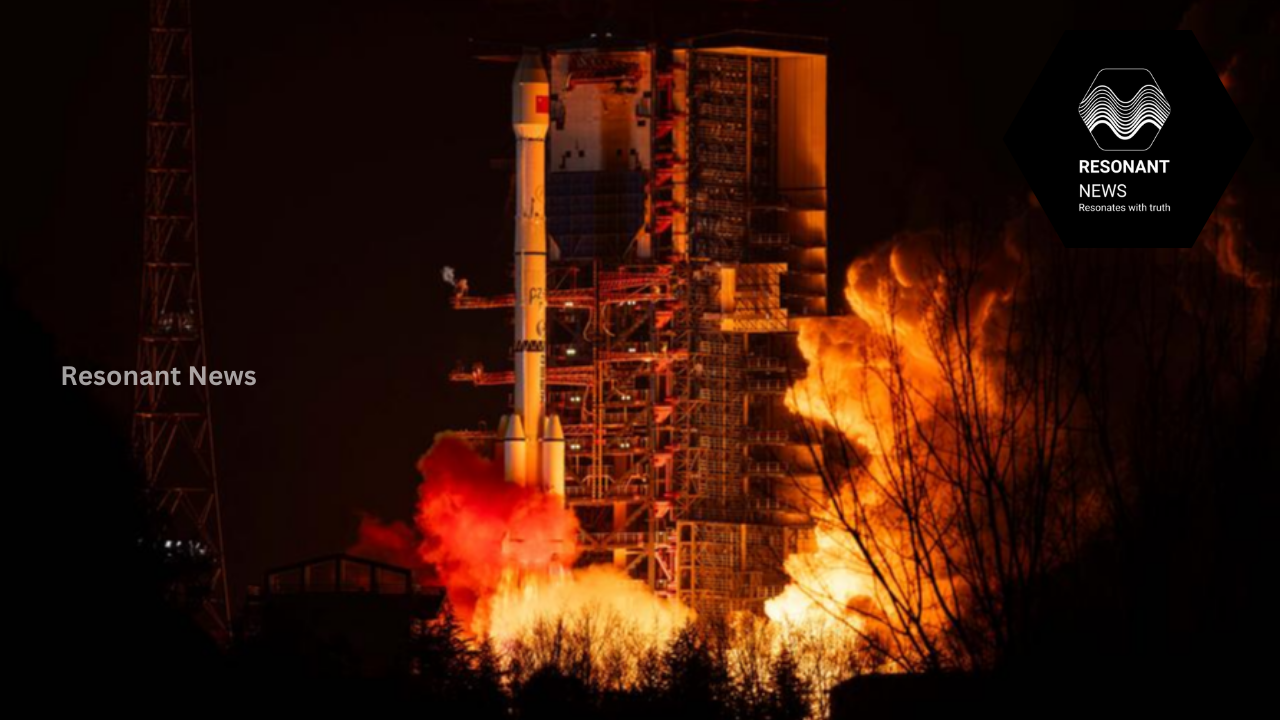

On January 6, China launched the Shijian-25 satellite from the Xichang Satellite Launch Center using a Long March 3B rocket. This mission aims to test satellite refueling technologies to extend satellite service life. Notably, this was the 555th launch of the Long March series.
Reports suggest that the satellite was placed in geostationary transfer orbit (GTO), with airspace closure notices indicating this trajectory. The Shijian series is typically associated with experimental and demonstration missions, emphasizing China’s focus on enhancing satellite longevity and reducing space operation costs.
From India’s perspective, the limited transparency surrounding this mission raises concerns about its potential dual-use nature. While the stated aim is to extend civilian satellite life, the same technology could be adapted for military purposes, including servicing military satellites during both peacetime and wartime. The People’s Liberation Army is reportedly advancing its capabilities in on-orbit satellite refueling, a development that India and other space-faring nations will monitor closely.
This mission follows the 2021 Shijian-21 launch, which focused on space debris mitigation. That satellite successfully docked with an inactive Beidou navigation satellite, relocating it to a graveyard orbit. It likely featured advanced robotic arms or docking mechanisms, raising further strategic implications for satellite manipulation capabilities.
China’s comprehensive approach to space operations—emphasizing sustainability, efficiency, and debris reduction—demonstrates its growing ambitions. Additionally, Chinese commercial entities are planning demonstration missions for refueling and active debris removal, paralleling similar developments by other global players like Northrop Grumman, which is preparing its Mission Robotic Vehicle for a 2026 launch.
With Shijian-25 marking China’s first orbital launch of 2025, India remains vigilant about China’s expanding space activities. While China’s annual launch plans for 2025 remain unclear, the nation’s ambitious trajectory—following 68 launch attempts in 2024—signals a continued focus on space dominance. India will need to keep a close watch on these developments, considering the potential strategic and security implications.

Leave a Reply