
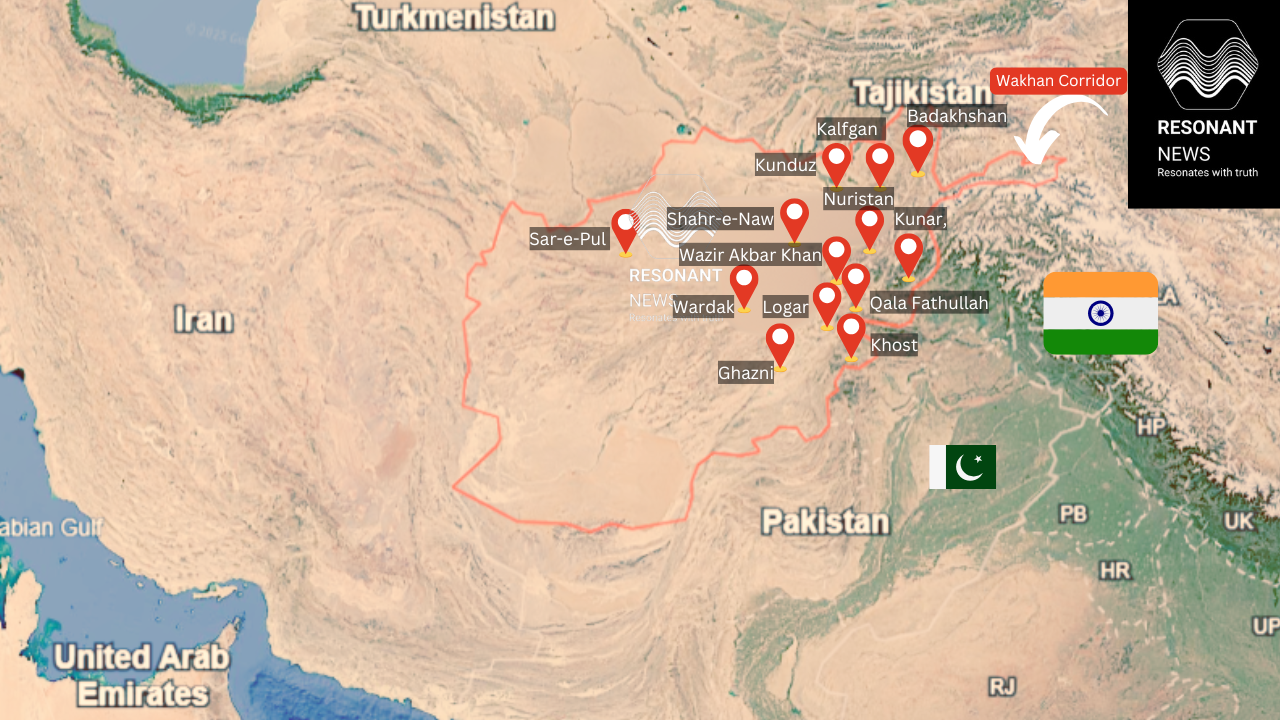

UN Security Council reported that the Taliban had deployed the Mansouri Brigade, a suicide bomber unit composed of Ansarullah and al-Qaeda fighters, in Badakhshan, in North Afghanistan. Meanwhile, Russia has warned Talibs that ISIS wants to destabilise Wakhan corridor and Northern.Afghanistan.
UN REPORT:
According to the report, the Taliban are using this suicide unit in operations against the resistance fronts against the group. The National Resistance Front and the Afghan Liberation Front are among the military and political movements that have organized attacks against the Taliban in Kabul and the northern provinces of Afghanistan over the past three years.
After the Taliban regained control of Afghanistan, they created the Mansouri Brigade. Taliban officials said the brigade was a “band of martyrs and martyrdom.” The Taliban refer to suicide bombers as “martyrs or martyrs.”
Taliban officials said the suicide unit was deployed in the northern provinces, including Badakhshan. According to the Taliban, the Mansouri Brigade is equipped with the most advanced military equipment.
The UN Security Council’s Sanctions Support and Monitoring Analysis Team has released its 35th report on ISIS, Al-Qaeda, and associated groups, entities and organizations.
The report, released on February 7, says the Taliban has allowed Al-Qaeda to establish bases in Afghanistan, and that the terrorist organization’s safe houses and training camps are scattered throughout the country.
~Al-Qaeda fighters living in upscale areas of Kabul
According to the report, the Taliban is sensitive to the presence of Al-Qaeda members in Afghanistan. The report said that low-ranking Al-Qaeda members live with their families in the Qala Fathullah, Shahr-e-Naw and Wazir Akbar Khan areas of Kabul under the protection of Taliban intelligence.
The UN Security Council said that senior Al-Qaeda leaders have been moved to rural areas, including the village of Belgholi in Sar-e-Pul province, as well as Kunar, Ghazni, Logar and Wardak provinces.
The report said that some countries have reported that Hamza Al-Ghamdi, along with his family, is present in the heavily guarded Shesh Darak area of Kabul.
Hamza Saleh bin Saeed Al-Ghamdi, a citizen of Saudi Arabia, is a senior Al-Qaeda leader. He was a trusted confidant of Al-Qaeda founder Osama bin Laden and was responsible for his protection.In June 2023, the US State Department’s Rewards for Justice program announced a reward of up to $5 million for information leading to Al-Ghamdi’s arrest or whereabouts.
The Security Council report also states that the Taliban have transferred Abu Ikhlas al-Masri to a safe location in the Afshar area of Kabul, which they are using as a training center for their forces.Abu Ikhlas al-Masri is a senior al-Qaeda commander said to be operating in Afghanistan. He was reportedly released from Bagram prison after the Taliban regained control of Afghanistan and is now in the country.
~Ansarullah training camps in Khost
The UN Security Council also noted the activities of the Ansarullah group.
The group was said to have training camps in Khost province with al-Qaeda engineers and weapons instructors and had established a special military center in the Kalfgan district of Takhar province to train Central Asian and Arab fighters.
The report noted that the Ansarullah group had formed a unit called “Ansar” in the Imam Sahib district of Kunduz province to infiltrate border areas.
~The Trans-Regional Threat of ISIS Khorasan
The UN Security Council report shows that ISIS-K is no longer a threat limited to Afghanistan, but is expanding its influence to neighboring countries, especially in Central Asia, Iran and even Russia. According to the report, ISIS-K continues to threaten Central Asian countries from northern Afghanistan. It has been said that the group’s previous attacks in Iran and Russia show that its focus is not only on Afghanistan. In part, the UN Security Council report states that ISIS-K is trying to exploit the dissatisfaction of Tajiks in northern Afghanistan with the Taliban and attract more support. The Security Council report states that the number of supporters and supporters of ISIS-K has increased significantly in Badakhshan and Kunduz provinces.
The report also refers to a significant increase in the number of supporters of ISIS-K in Badakhshan and Kunduz provinces. It is said that despite the Taliban’s pressure on ISIS, especially in Helmand and Kandahar provinces, there are reports that some farmers have given shelter to ISIS fighters in revenge against the Taliban due to the ban on poppy cultivation.
~ISIS Entry Routes into Afghanistan
The Security Council emphasizes that ISIS-K has created new routes for recruiting and transferring forces. It has been said that the main routes for new forces to enter Afghanistan include passing through Van Province in Turkey and the cities of Urmia, Mashhad, and Zahedan in Iran.
The report states that the newly recruited forces entered Afghanistan through Herat and Nimroz and are being trained near Yawan district in Badakhshan province, where a camp for fighters and suicide bombers has been set up.
The report emphasizes that training camps with Arab instructors are also operating in Kunar and Nuristan provinces.
Part of the report states that ISIS Khorasan Branch has attempted to attract members of al-Qaeda-affiliated groups, including the East Turkestan Islamic Movement and the Turkestan Islamic Party, through economic incentives.
It has been said that at the same time, as ISIS’s activities expanded towards northern Afghanistan, the Taliban has mobilized groups such as the East Turkestan Islamic Movement, the Turkestan Islamic Party, the Islamic Movement of Uzbekistan, and Jamaat Ansarullah to confront them.
Russia warns Taliban that ISIS wants to destabilise Northern Afghanistan and Wakhan corridor
Condemning the recent suicide attack in Kunduz, the Russian Foreign Ministry announced that ISIS’s goal is to create insecurity in the peaceful areas of northern Afghanistan.
The ministry wrote in a statement on Thursday, February 15, that Moscow is confident that the Taliban can identify the organizers of the Kunduz “terrorist attack” and “bring them to justice.”
The statement said that “Russia strongly condemns the brutal terrorist attack carried out on February 11 by a suicide bomber at the entrance to a bank in Kunduz.”
The Russian Foreign Ministry, recalling that the Khorasan branch of ISIS claimed responsibility for the attack, said that more than 25 people were killed in the attack.
On Tuesday, February 13, a suicide bomber detonated his explosives in front of the Kabul Bank office in Kunduz, where government employees and Taliban soldiers were waiting to receive their salaries. ISIS later said that “hundreds of Taliban personnel, including security commanders,” were killed in the attack .
Russian Ambassador to the United Nations Vassily Nebenzia told a Security Council meeting on Monday, February 12, that the increase in ISIS-K activity in Afghanistan was not accidental or without root causes. He stressed that the international community has not paid due attention to the access of terrorist groups like ISIS to American weapons remaining in Afghanistan.
Russian Foreign Minister Sergei Lavrov expressed concern about the insecurity in Afghanistan during a meeting with his Tajik counterpart, Sirajuddin Mehrdadin, in Moscow on Thursday, February 15. He said that the difficult security situation in Afghanistan has consequences for neighboring countries.
These statements come as a suicide attack targeted the Taliban Ministry of Urban Development in Kabul on Thursday morning. Arsala Kharoti , the deputy finance and administration minister of the Taliban Ministry of Urban Development and Housing, was wounded in the attack.

Leave a Reply