
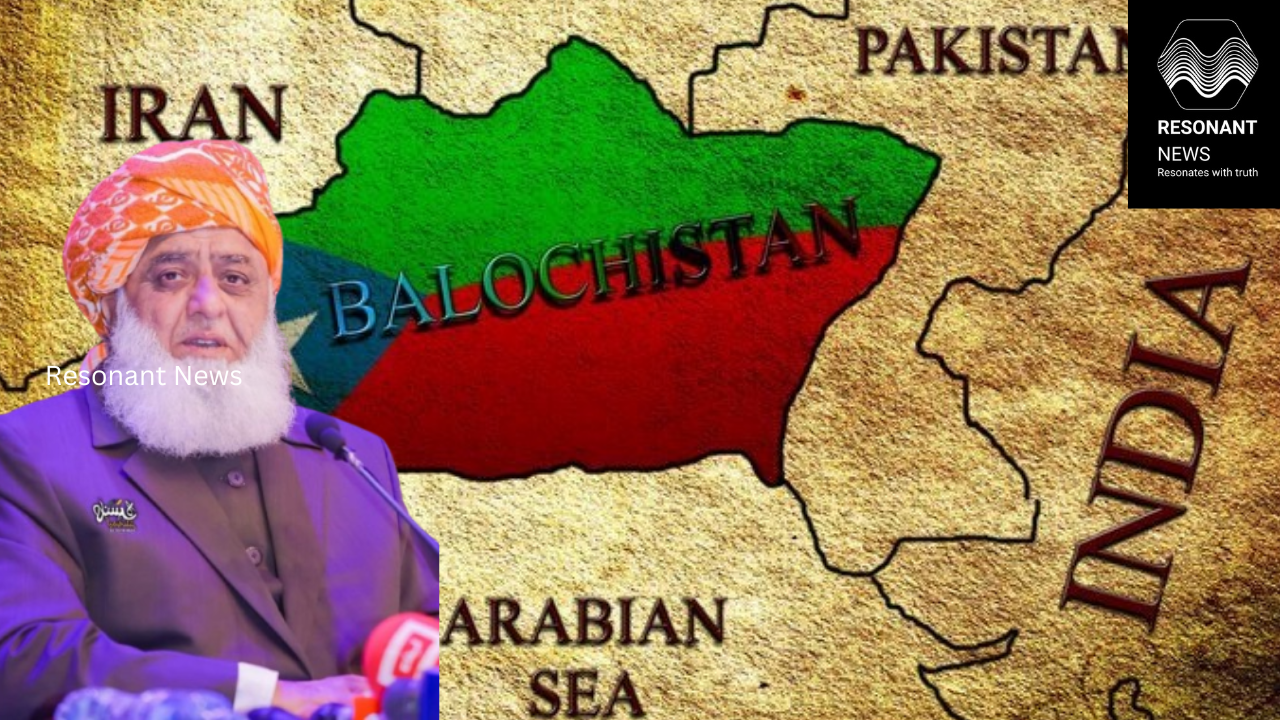

During a session of the National Assembly, which hurriedly passed five bills aimed at tackling human trafficking and organized begging amid loud protests from the opposition, JUI-F chief Maulana Fazlur Rehman issued a stark warning. Speaking on a point of order, he cautioned that Pakistan’s territorial integrity could be at risk sooner rather than later unless urgent measures were taken to address pressing issues, including the absence of state authority in Balochistan, Khyber Pakhtunkhwa, and the newly merged tribal districts.
His remarks were met with stunned silence in the assembly, with occasional interruptions from opposition members shouting “shame, shame.” PTI lawmakers, who had earlier attempted to disrupt proceedings by raising quorum issues and chanting slogans during the bill approvals, eventually listened to Maulana Rehman’s speech in complete silence. However, when Law Minister Azam Nazeer Tarar took the floor to respond, PTI members resumed their sloganeering, and one member once again pointed out the lack of quorum. Consequently, Deputy Speaker Ghulam Mustafa Shah adjourned the session until Tuesday morning due to insufficient attendance, which requires at least 84 members in the 336-member house.
Fazl’s Warnings
During his speech, the JUI-F chief alleged that key policy decisions were being made behind closed doors by individuals above the government, politicians, and parliament, without any input from elected representatives. He claimed that there was no effective state control in Balochistan and KP, where armed groups were engaged in conflict. He also criticized Prime Minister Shehbaz Sharif, suggesting that if asked about the situation in the tribal areas, he would admit to having no knowledge.
Maulana Rehman further accused the establishment of making all decisions in isolation, with the government merely acting as a rubber stamp. He warned that 5-7 districts in Balochistan were on the verge of declaring independence, and if that happened, the United Nations would recognize them the next day. Similarly, he asserted that government authority had collapsed in southern KP, where police checkpoints had been abandoned, and armed groups had taken control.
Cautioning against the implications of prolonged border conflicts, he suggested they could lead to “geographical changes.” He also speculated that if former U.S. President Donald Trump could comment on Gaza, he could just as easily claim control over Pakistan’s tribal areas. Additionally, he warned that international forces were eyeing Pakistan’s nuclear and missile programs.
Criticizing the government for allowing IMF representatives to meet with members of the judiciary and legal community, Maulana Rehman offered to cooperate with the administration—but only on the condition that civilian rule was fully established and parliament regained decision-making authority.
This comes on a day Pakistan lost 4 Frontier Corps soldiers to an attack in Balochistan whilst TTP claims to have taken over a post in Kurram.

Leave a Reply