
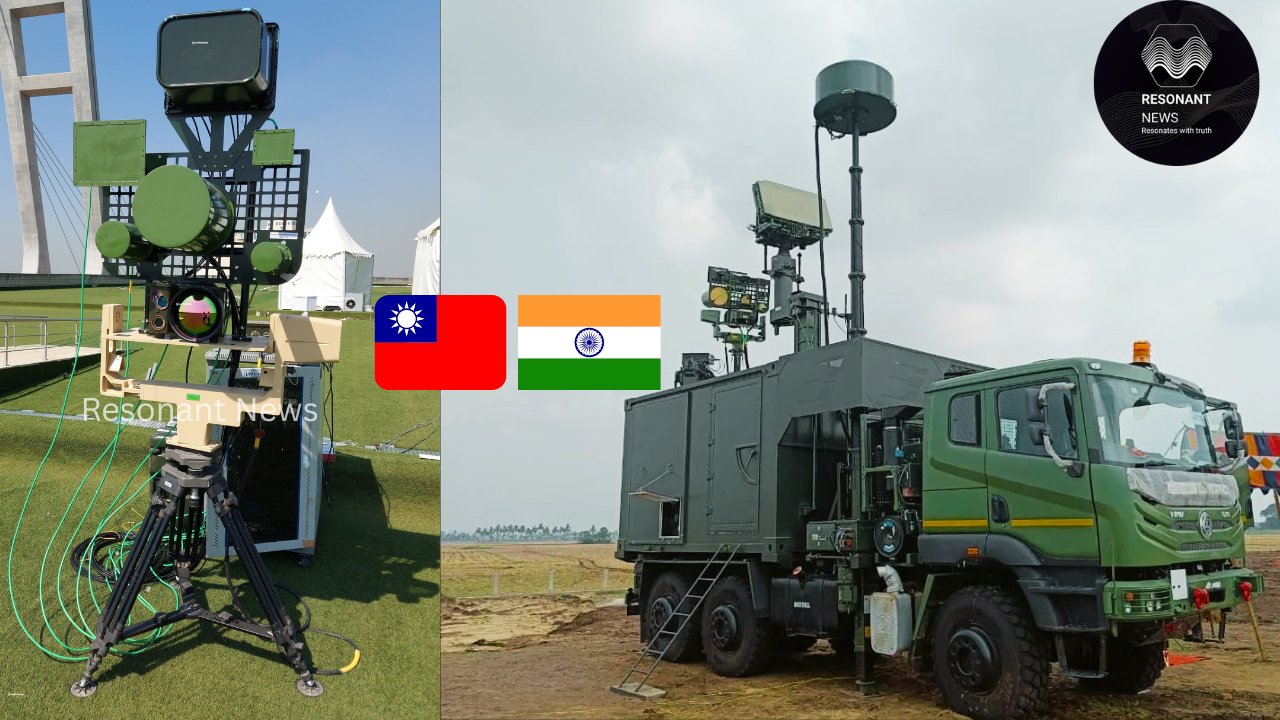

Taiwan has formally approached India to acquire the D4 Anti-Drone System (D4S), an advanced defense mechanism developed by India’s Defence Research and Development Organisation (DRDO), according to a recent report by the Indian Defence Research Wing. The request comes as Taiwan aims to bolster its defenses against escalating threats from China.
The D4S, manufactured by Bharat Electronics Limited (BEL), is designed to detect, deter, and destroy hostile drones. It integrates “soft kill” techniques, such as electronic jamming and GPS spoofing, with “hard kill” capabilities, including laser-based directed energy weapons, to neutralize drone threats effectively.
What the D4 Anti-Drone System Does
The D4S is a comprehensive anti-drone solution that neutralizes enemy drones through a combination of detection and engagement strategies. Its primary functions include:
- Detection: The system identifies and tracks drones using advanced sensors, enabling real-time monitoring of airspace for potential threats.
- Deterrence: It employs non-lethal methods to disrupt drone operations, ensuring minimal collateral damage in sensitive areas.
- Destruction: For persistent threats, the system can eliminate drones using lethal means, ensuring complete neutralization.
The system uses both “soft kill” and “hard kill” methods:
- Soft Kill: Disrupts drone operations through non-destructive means, such as electronic jamming to interfere with drone communication systems and GPS spoofing to mislead navigation systems, causing drones to lose their intended path or control.
- Hard Kill: Engages drones with laser-based directed energy weapons, physically destroying them with precision to prevent further threats.
This dual approach makes the D4S versatile, capable of handling a wide range of drone threats, from small commercial drones to sophisticated military-grade UAS.
Composition of the D4 Anti-Drone System
While specific technical details of the D4S are not fully disclosed due to its strategic nature, the system is known to integrate several advanced components, including:
- Radar and Sensors: High-sensitivity radar systems and electro-optical/infrared (EO/IR) sensors for detecting and tracking drones, even those with low radar cross-sections.
- Electronic Warfare Suite: Jamming devices that disrupt radio frequency (RF) signals and GPS navigation, rendering drones inoperable or disoriented.
- Laser-Based Directed Energy Weapons: High-energy lasers capable of physically destroying drones by burning through critical components or downing them with precision.
- Command and Control (C2) System: A centralized interface that integrates data from sensors and coordinates responses, allowing operators to make real-time decisions.
- Mobility Platforms: The system is likely mounted on mobile platforms, enabling deployment in diverse operational environments, from urban areas to border regions.
These components work in tandem to provide a layered defense, ensuring robust protection against drone swarms or individual threats.
Role in Operation Sindoor
Operation Sindoor, referenced in the context of a recent India-Pakistan conflict, showcased the D4S’s operational effectiveness. During this operation, Pakistan reportedly deployed swarms of Turkish-made drones, likely for reconnaissance or attack purposes. The D4S played a pivotal role in countering these threats:
- Neutralization of Drone Swarms: The system successfully detected and tracked multiple drones operating in coordinated swarms, a challenging scenario due to the volume and speed of such attacks.
- Effective Engagement: Using its soft kill capabilities, the D4S disrupted the drones’ communication and navigation systems, causing many to lose functionality. For drones that persisted, the hard kill laser systems were employed, destroying them with precision.
- Operational Success: The D4S’s ability to counter these drones prevented potential damage to Indian assets and demonstrated its reliability under combat conditions.
This performance during Operation Sindoor highlighted the system’s capability to handle modern drone warfare, boosting its reputation as a cutting-edge defense solution and prompting interest from nations like Taiwan, which face similar threats.
The D4 Anti-Drone System is a sophisticated, multi-layered defense platform that combines detection, electronic disruption, and physical destruction to counter drone threats. Comprising advanced radar, electronic warfare tools, and laser technology, it offers a robust solution for modern aerial security challenges. Its proven effectiveness in Operation Sindoor against Pakistan’s drone swarms underscores its strategic importance, making it a sought-after system for nations like Taiwan looking to strengthen their defenses against rising drone-based threats.

Leave a Reply