
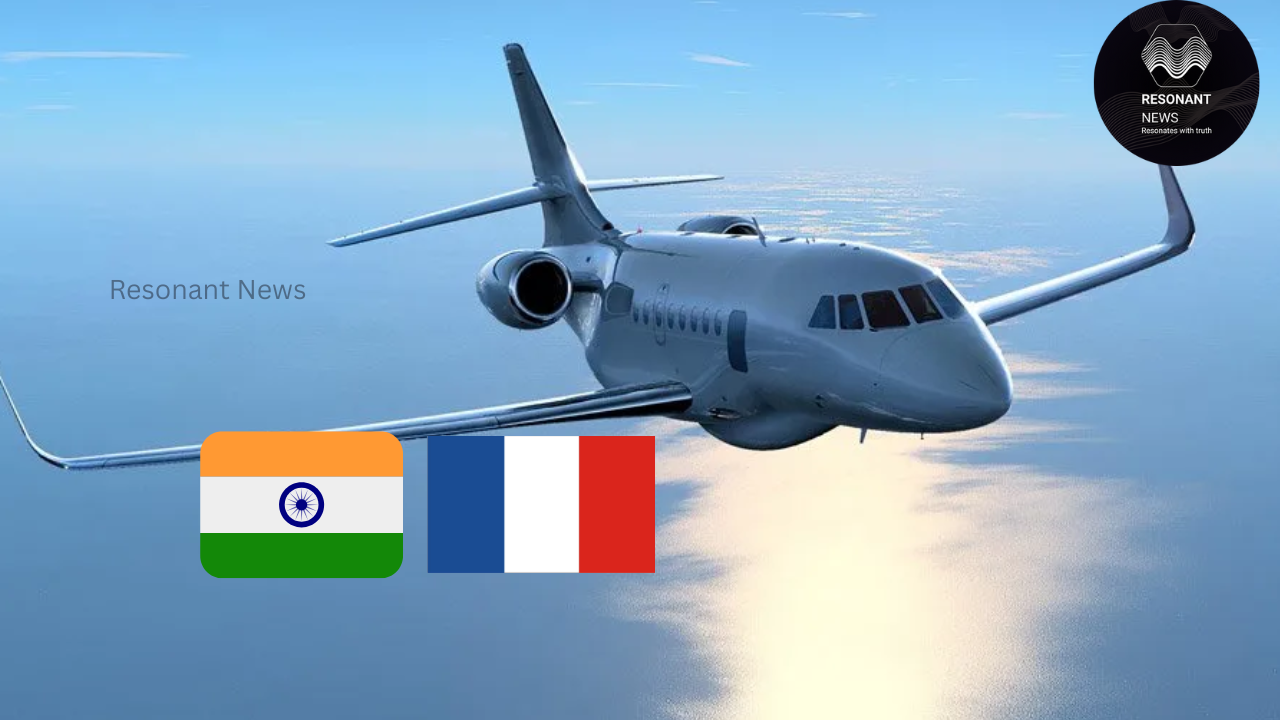

Paris, France – In a landmark move for India’s aerospace industry, French aerospace giant Dassault Aviation has announced a strategic partnership with Reliance Aerostructure Ltd (RAL), a Reliance Group company led by Anil Ambani, to manufacture its flagship business jet, the Falcon 2000, in Nagpur, India. The collaboration, unveiled at the Paris Air Show on Wednesday, marks the first time Dassault will produce its best-selling executive jet outside France, with the first made-in-India Falcon 2000 expected to roll out by 2028.
This announcement follows closely on the heels of another significant partnership between Dassault and Tata Advanced Systems, which revealed plans two weeks ago to establish a facility in Hyderabad for manufacturing the fuselage of the Rafale fighter jet. Dassault’s longstanding ties with India, exemplified by the Indian Air Force’s use of Mirage 2000 and Rafale fighters, underscore the deepening aerospace collaboration between the two nations.
The joint venture between Dassault and Reliance positions India as an emerging hub for high-end business jet manufacturing, placing it among an elite group of nations— including the United States, France, Canada, and Brazil—capable of producing advanced business jets.
“This historic partnership represents a transformative moment for India’s aerospace and manufacturing sectors,” the companies stated in a joint release. “For the first time, Dassault Aviation will produce Falcon 2000 jets outside France, establishing India as a strategic center for cutting-edge business jet production. The made-in-India jets will meet growing demand in India’s burgeoning business aviation market while also serving international customers.”
While the joint release did not disclose the production capacity of the Nagpur facility, industry reports suggest it could produce up to 24 Falcon 2000 jets annually. This initiative marks the first instance of a foreign aircraft manufacturer establishing a final assembly line (FAL) in India for civilian aircraft, a significant step toward bolstering India’s aerospace manufacturing ecosystem.
The Falcon 2000, renowned for its performance and luxury, is poised to capitalize on the rising demand for business jets in India and globally. The partnership aligns with India’s broader push to develop indigenous manufacturing capabilities and attract global aerospace investment.
Dassault’s decision to manufacture in India reflects confidence in the country’s skilled workforce and growing industrial capabilities. The collaboration with Reliance Aerostructure Ltd builds on Dassault’s decades-long relationship with India, which includes not only the supply of fighter jets (Mirage 2000 and Rafales) but also contributions to India’s defense manufacturing ecosystem.
As India aims to become a global aerospace powerhouse, this partnership is expected to create jobs, foster technology transfer, and enhance India’s role in the international aviation supply chain. The made-in-India Falcon 2000 jets are set to redefine India’s presence in the global business aviation market, marking a new chapter in its aerospace journey.
Dassault Aviation will also transfer the assembly of the front section of Falcon 8X and Falcon 6X—two other jets in the Falcon family of aircraft—in addition to the wings and complete fuselage assembly of Falcon 2000 to the partners’ joint-venture Dassault Reliance Aerospace Ltd (DRAL). The transfer of assembly operations combined with major facility upgrades, will pave the way for the first flight of made-in-India Falcon 2000 by 2028, Dassault Aviation and RAL said.

Leave a Reply