
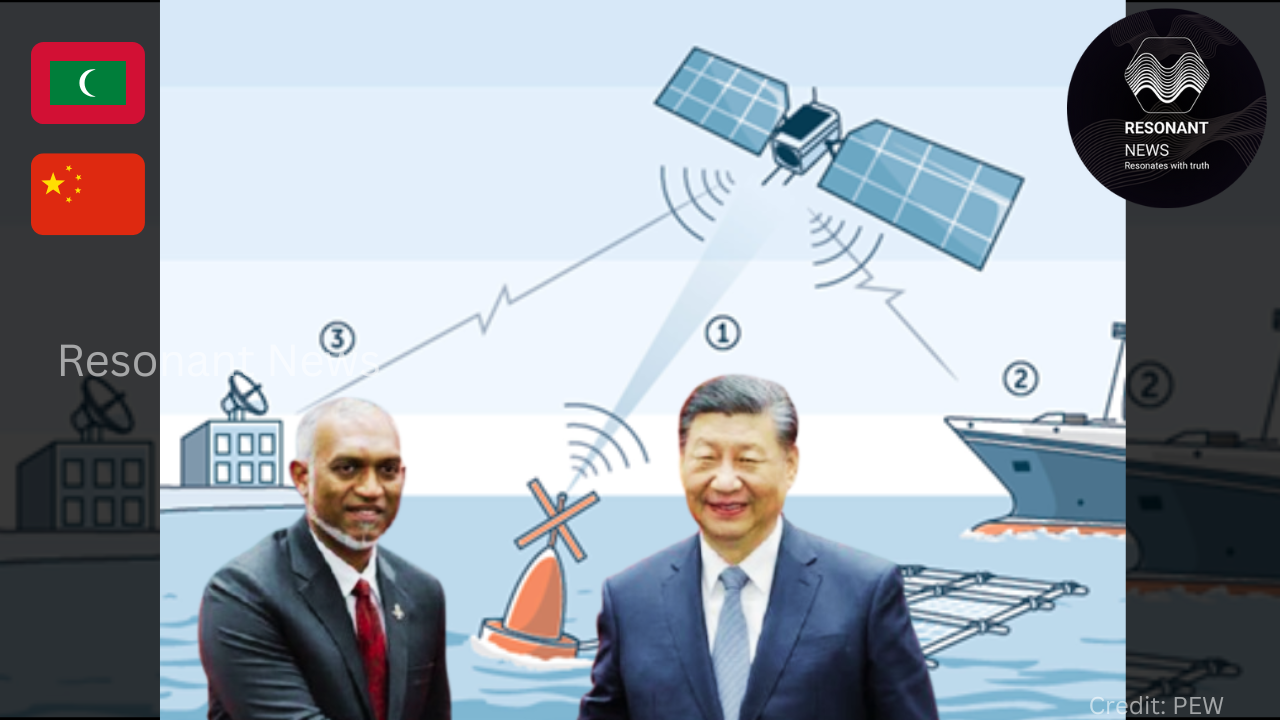

The government of President Dr. Mohamed Muizzu in the Maldives is negotiating with China about deploying Fish Aggregating Devices (FADs) in the Indian Ocean, sparking worries about the strategic consequences of this initiative. These devices are designed to gather chemical and physical ocean data while also monitoring fish movements. The talks coincide with a struggling Maldivian fishing sector, yet the Ministry of Fisheries and Ocean Resources has remained vague, only noting that the discussions aim to enhance cooperation with China.
Chinese officials have engaged with the Maldivian Ministry of Tourism and Environment and the meteorological agency, reportedly seeking approval through the Meteorology Department to install these devices. Details about the project’s scope, actions, and goals remain undisclosed by the government. This development aligns with China’s growing presence in Maldivian waters, highlighted by the activities of the advanced Chinese research vessel Xiang Yang Hong 03 in early 2024. The vessel lingered in the region for approximately a month, prompting unease among Indian officials amid rising tensions between the Muizzu administration and India.
The Maldives’ Ministry of Foreign Affairs claimed the vessel’s visit was for resupply and crew changes, but Indian analysts suspect potential military motives. These concerns have intensified with the Muizzu administration’s signing of a new agreement with China’s South China Sea Institute of Oceanography on February 19, 2025, further fueling suspicions of China’s data-collection efforts in the Indian Ocean amid strained Maldives-India relations.
How China Could Use FADs to Spy on India and Other Ships
Fish Aggregating Devices (FADs) are traditionally used to attract fish for easier harvesting, but the ones under discussion here are equipped to collect extensive oceanographic data and track movements. If strategically placed in the Indian Ocean, these devices could serve China as tools for espionage and military advantage, particularly against India and other regional naval forces. Here’s how:
FADs can measure water temperature, salinity, currents, and other physical properties. This data is critical for naval operations, especially for submarines, which rely on understanding the ocean environment to navigate and evade detection. For instance:
- Submarine Stealth: Submarines use thermoclines—layers where water temperature shifts sharply—to mask their presence from sonar. Detailed ocean data could help China predict these conditions, enhancing its own submarine operations or detecting those of others, including India’s navy.
- Sonar Optimization: Sound travels differently based on water properties. By mapping these variables, China could improve its sonar capabilities, tracking ships and submarines more effectively.
If equipped with acoustic sensors—likely intended for fish tracking—these devices could also detect larger objects:
- Ship and Submarine Detection: Sensors sensitive to fish movements might pick up propeller noise or mechanical sounds from vessels. Positioned near key shipping lanes or naval routes, FADs could monitor the presence and patterns of Indian warships, commercial ships, or submarines, providing China with real-time intelligence.
- Strategic Placement: Deploying FADs near India’s maritime borders or busy chokepoints like the Malacca Strait could amplify this surveillance capability.
Advanced FADs might go beyond acoustics to intercept electromagnetic signals:
- Communications and Radar: If capable of detecting radio waves or radar emissions from ships, these devices could gather intelligence on naval communications, operational patterns, or even fleet positions, offering China a window into Indian and regional naval activities.
The data collected could enable detailed mapping of the Indian Ocean’s seafloor:
- Submarine Navigation: Accurate maps of underwater terrain help submarines identify hiding spots, routes, or hazards. This knowledge could give China’s navy a tactical edge in planning operations or ambushes in the region.
Strategic Implications for India
The Indian Ocean is a vital artery for global trade and a key area for India’s naval power projection. China’s access to such data could:
- Enhance Naval Power: Improved environmental knowledge strengthens China’s ability to deploy and conceal its forces, potentially challenging India’s dominance in the region.
- Track Regional Activity: Monitoring ship movements could reveal military exercises, patrols, or supply routes of India and its allies, like the United States or Japan, active in the Indo-Pacific.
- Geopolitical Leverage: Amid tensions with India and growing Maldives-China ties, this data could support China’s broader strategic goals, such as securing maritime trade routes or countering India’s influence.
In essence, while FADs may be presented as tools for fisheries research, their potential to collect and transmit oceanographic and acoustic data makes them dual-use assets. China could exploit them to gain a military and intelligence advantage, heightening India’s concerns about security in its maritime backyard.

Leave a Reply