
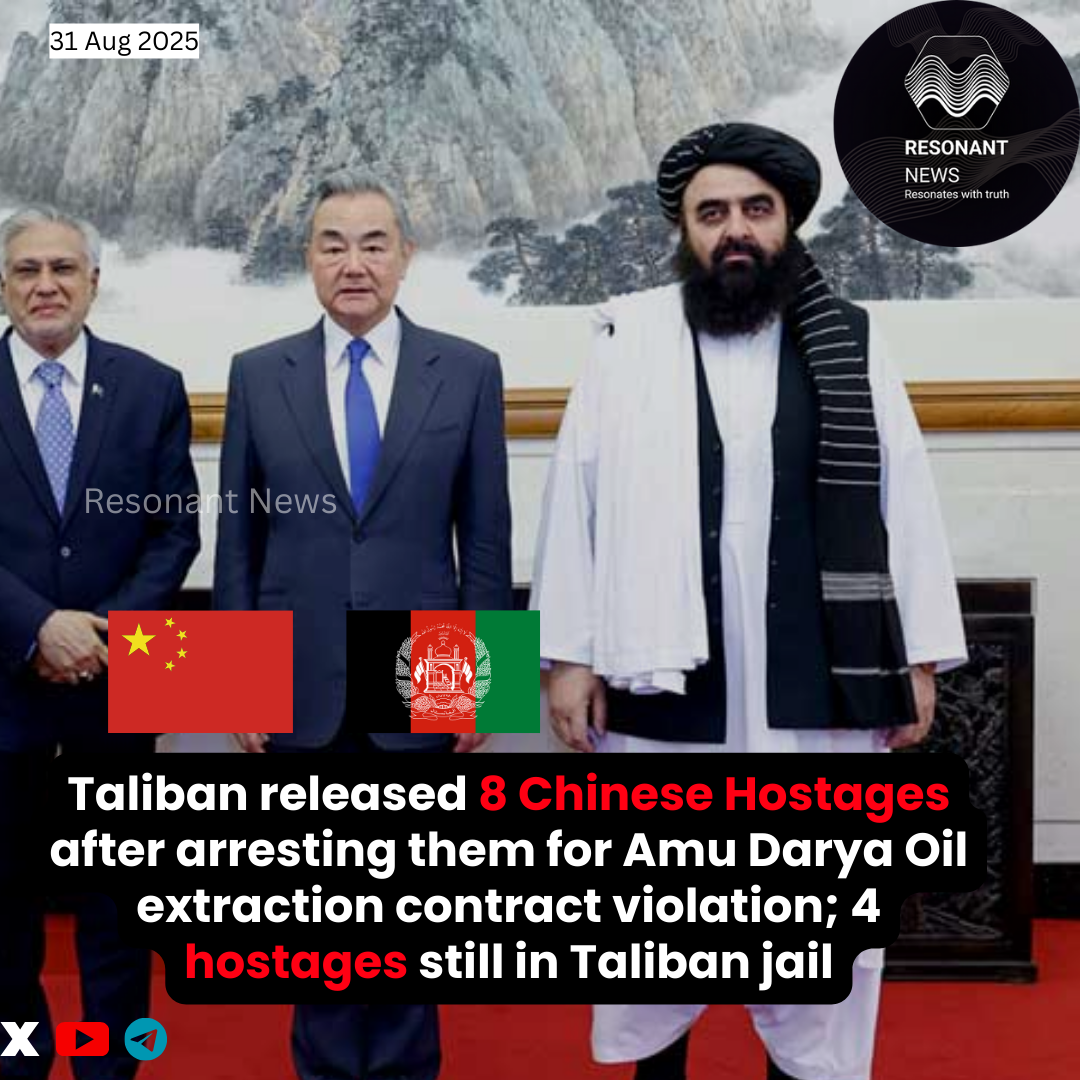

US National Public Radio has reported that following the cancellation of the Amu Darya oil and gas extraction contract between the Taliban and a Chinese company, the Taliban seized control of the oil fields and expelled Chinese employees from the site. According to the report, 12 Chinese employees were detained, and their passports confiscated.
In June, Taliban fighters reportedly entered the oil fields armed and drove out company staff. Soon after, 12 Chinese employees were arrested in Kabul and had their passports taken away. Eight of them were later released and allowed to return to China, while four remain in Kabul with no clarity on when they will be freed. Notably, the release of the eight coincided with Chinese Foreign Minister Wang Yi’s visit to Kabul.
The Taliban’s Ministry of Mines and Petroleum stated that the Chinese company failed to meet its financial obligations, including timely royalty payments, leading to the contract’s cancellation. However, company representatives rejected this claim, alleging that Taliban officials pressured them to sign a document voluntarily terminating the agreement. In exchange, the Taliban promised to release the company’s bank accounts and passports in Kabul—assets reportedly worth millions of dollars.
A Taliban official confirmed the confiscation of passports but denied that the employees had been arrested. The Chinese company, however, maintains that its staff were effectively held hostage.
Chinese officials told NPR that their investment in Afghanistan was not only for profit but also aimed at promoting development and stability in the country—as well as safeguarding stability in China’s Xinjiang region. They highlighted that the Amu Darya project had created thousands of jobs and generated millions in revenue for the Taliban, yet the group remained dissatisfied. “The Taliban do not have a win-win mentality; they think like bandits, wanting everything for themselves,” one official remarked.
The Chinese embassy in Washington stated it was unaware of the situation but emphasized the importance of protecting Chinese citizens abroad. Meanwhile, Omar Samad, former Afghan ambassador to Canada and France, warned that mishandling the incident could strain relations between China and Afghanistan.
The Amu Darya oil extraction agreement, signed in January 2023 for a 25-year period, required the Chinese company to invest $540 million in the first three years and pay $150 million to the Taliban in the first year alone. The project spanned 4,500 square kilometers across Sar-e-Pul, Faryab, and Jawzjan provinces, with an estimated capacity of 87 million barrels.
Despite these commitments, the contract collapsed after only two and a half years, with both sides blaming each other. Other Chinese ventures in Afghanistan, including the much-discussed Aynak copper mine project, also remain unimplemented.

Leave a Reply