
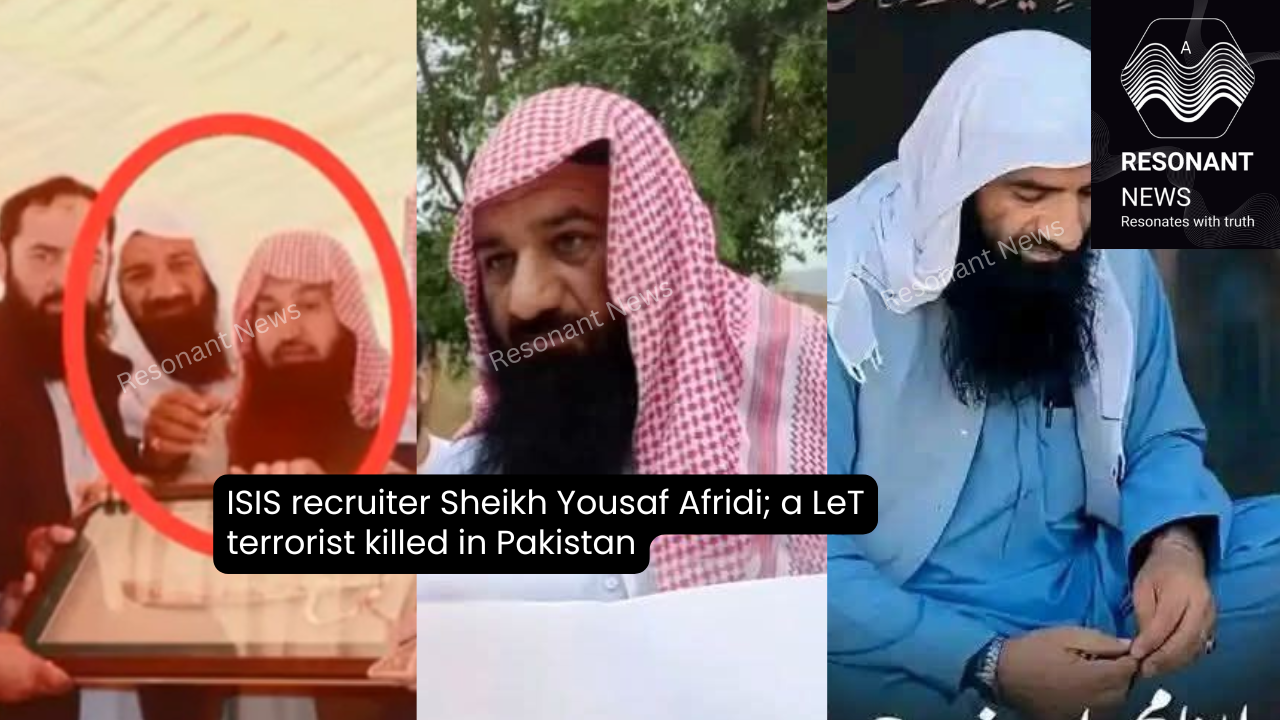

The volatile border regions of Pakistan have witnessed a significant escalation in targeted violence following the killing of Sheikh Yousaf Afridi, a prominent and controversial religious figure in the Landi Kotal area of Khyber. While local authorities investigate the unidentified gunmen who carried out the attack, the incident has pulled back the curtain on the complex, often overlapping networks of militancy in the region.
Sheikh Yousaf Afridi, a member of the influential Zakha Khel tribe, was reportedly targeted in a “blind firing” incident by unknown assailants who fled the scene immediately. In the immediate aftermath, no group has claimed responsibility—a common occurrence in the region where the interests of the Pakistani state, the Afghan Taliban, and various Salafist militant groups often collide.
Afridi was more than just a tribal elder; he was a recognized scholar of the Ahl-e-Hadith (Salafi) school of thought. However, reports following his death suggest a darker dual role: acting as a bridge between established terror groups and emerging threats.
The most striking allegations surfacing from local sources involve Afridi’s role as a “manpower” provider. According to these reports Afridi is alleged to have been recruiting fighters from the Khyber Pakhtunkhwa region for the Islamic State Khorasan Province (ISIS-K). His recruitment efforts were aimed at bolstering ISIS-K forces in their ongoing and bloody conflict against the Taliban in Afghanistan.
Some reports categorize him as a leader within Lashkar-e-Taiba (LeT) circles, suggesting that he was pivoting resources or personnel from traditional LeT networks toward the ISIS cause—a move that highlights the fluid nature of extremist affiliations in the tribal belt.
Lashkar-e-Taiba/LeT was founded specifically as the militant wing of the Markaz-ud-Dawa-wal-Irshad (MDI), an Ahl-e-Hadith missionary organization. LeT identifies itself not just as a militant group, but as the vanguard of the Ahl-e-Hadith faith. This is why Afridi is being connected to LeT.
Unlike other groups that draw from the Deobandi school (like the Taliban), LeT draws almost exclusively from Ahl-e-Hadith mosques and madrasas. LeT relies on scholars (Sheikhs) within the Ahl-e-Hadith community to provide the religious justification (fatwas) for their activities.
In regions like Khyber, the Ahl-e-Hadith community is a tight-knit minority. A scholar who controls a madrasa or holds tribal influence, like Afridi, becomes a natural focal point for logistical support, funding, and recruitment.
As ISIS-K follows a “Global Salafi-Jihadist” ideology, it is doctrinally very close to the Ahl-e-Hadith foundations of LeT.
In recent years, many younger or more radical members of traditional groups like LeT have become “disillusioned” with nationalistic goals (like Kashmir) and have shifted their allegiance to ISIS-K’s global caliphate mission.
Summary of the Nexus
| Entity | Role in the Connection |
| Ahl-e-Hadith | The theological “software” providing the Salafi framework. |
| Lashkar-e-Taiba | The traditional “hardware” (militant infrastructure) built on that framework. |
| ISIS-K | The newer, more aggressive “update” that often recruits from the same Ahl-e-Hadith pool. |
The killing of Sheikh Yousaf Afridi reinforces a period of intense friction. Whether he was a victim of the Taliban’s campaign against ISIS recruits or a target of internal tribal rivalries, his death marks a significant blow to the ISIS recruitment pipeline in the Khyber region.

Leave a Reply