
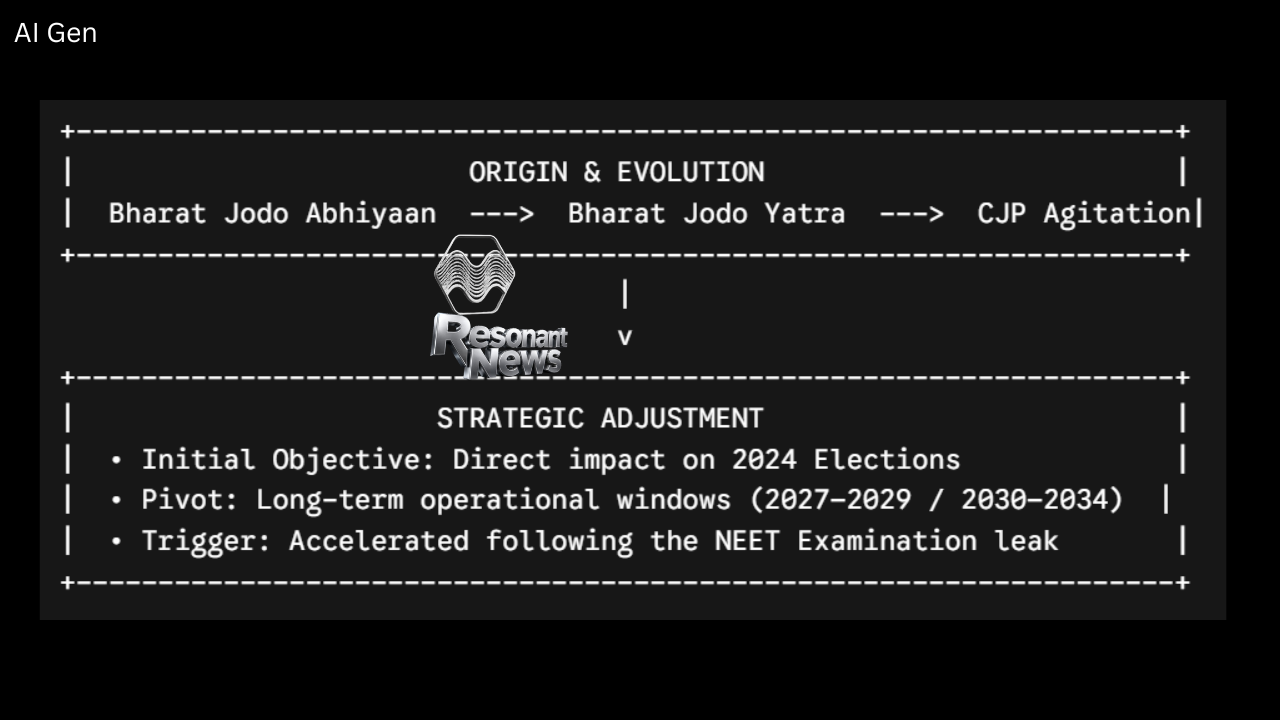

What appears on the surface to be a spontaneous wave of civil unrest across India’s urban centers is, in reality, the culmination of a meticulously planned three-year strategy.
Investigations into the origins of the ongoing Citizens for Justice and Peace (CJP) demonstrations reveal a deep-seated operational grid bridging domestic activist groups, regional political factions, and foreign diaspora networks.
From initial political rallies to clandestine cross-border meetings in Bangladesh and Sri Lanka, the timeline reveals how a long-term strategy for regime change was accelerated by recent national developments.
The Strategic Shift: From 2024 to an Accelerated Timeline
The blueprint for the current agitation traces back to 2023 under the banner of the Bharat Jodo Abhiyaan (Unite India Movement), which later transformed into a major political campaign ahead of the 2024 general elections. When the election cycle failed to deliver the anticipated political shift—impacted significantly by major cultural touchstones like the inauguration of the Ram Mandir in Ayodhya—the core organizing network reassessed its approach.
Organizers initially established two strategic windows for civil resistance modeled after recent regime-change dynamics seen in South Asia:
- Primary Window: 2027–2029
- Secondary Window: 2030–2034
However, this timeline was brought forward following public outrage surrounding leaks in the NEET nationwide competitive examination. Recognizing a volatile political opportunity, the network mobilized earlier than planned to capitalize on student and youth discontent.

Clandestine Operations: The Meeting Timeline
Planning for the current offensive was mapped out across four key international and domestic summits held throughout mid-2026:
1. The Regional Logistics Summit — April 2, 2026 (Bangladesh)
A strategic meeting convened in Bangladesh brought together left-wing operatives from Bangladesh, Myanmar, Nepal, and India. Key agenda items included:
- Tracking and organizing arms stockpiles stationed in Bangladesh intended for underground networks inside India.
- Formatting urban “hit squads” and covert operational channels via secure, remote video connections.
2. The Student Mobilization Hub — June 27, 2026 (New Delhi)
Held at Surjeet Bhavan in New Delhi, this summit was organized primarily by student bodies, including the Student Federation of India (SFI) and the All India Students Association (AISA). The meeting served as the ground-zero blueprint for launching nationwide street agitations starting July 20.
3. The Narrative Strategy Session — July 14, 2026 (Kochi)
Convened on behalf of Islamic scholar Maulana Arshad Madani and organized by the Social Democratic Party of India (SDPI), this meeting gathered key legal representatives and community organizers.
Key Takeaway: The agenda focused on reopening public debate around “Hindu terror” themes alongside the street protests. Reports indicate that funding from groups like SDPI, Jamiat Ulema-e-Hind, and Jamaat-e-Islami was channeled via legal intermediaries to cultivate acquitted figures from the 2008 Malegaon blast case for upcoming media briefings.
4. The International Coordination Link — July 23, 2026 (Sri Lanka)
Attended by key left-wing figures—including Vijay Prashad and Ashish Kothari of Vikalp Sangam—alongside delegates from Cuba, the Philippines, Sri Lanka, Nepal, and Bangladesh. Discussions centered on leveraging techniques used during the 2022 Sri Lankan economic protests, with organizational ties linking back to activists involved in the Ladakh solidarity hunger strikes.
Organizational Architecture
The operations rely on a two-pronged network of domestic umbrella groups and international advocacy fronts that provide both logistics and public relations cover.
The Domestic Front
At the center of domestic coordination is the National Alliance of People’s Movements (NAPM), acting as a broad umbrella for organizations seeking to maintain a low profile while pooling resources.
- Student & Youth Wings: SFI, AISF, NSUI, FTII Students’ Association, Ambedkar Students’ Association, and Desh Bhakti Yuva Manch (led by convicted activist Arun Bhelke).
- Civil Society & Political Bodies: CPI(M), CPI, PUCL, Vikalp Sangam, All India Kisan Sabha, Samvidhan Bachao Abhiyaan, and Hum Bharat Ke Log.
- Key Coordinators: Activists, lawyers, and political strategists including M.A. Baby, Viju Krishnan, Yogendra Yadav, Medha Patkar, Teesta Setalvad, Brinda Karat, Prashant Bhushan, Harsh Mander, Manoj Kumar Jha, and Shabana Azmi.
International & Diaspora Support
Beyond India’s borders, the operational apparatus draws significant backing from academic and human rights organizations:
- Academic Hubs: Student advocacy groups based out of SOAS University in London serve as a major recruitment ground for young left-wing activists.
- US Advocacy Groups: Organizations such as Hindus for Human Rights, headed by Sunita Viswanath with support from activists like Sangram Patil, lead overseas media campaigns.
- Diplomatic Channels: The wider campaign benefits from diplomatic interest across South Asia, including formal visits by foreign dignitaries—such as Cuban Ambassador Juan Carlos Marsán Aguilera—to left-wing party headquarters in New Delhi, along with monitoring from regional intelligence channels.
As the agitation unfolds across major cities, the strategy has expanded beyond local grievances to encompass broader foreign policy levers—evidenced by recent open letters signed by over 150 prominent figures urging the government to restart dialogue with Pakistan and renegotiate terms around the Indus Water Treaty.
What is presented to the public as an organic student-and-farmer movement continues to reflect a deeply interconnected, long-term political campaign designed to exert sustained pressure on India’s administrative architecture.

Leave a Reply