
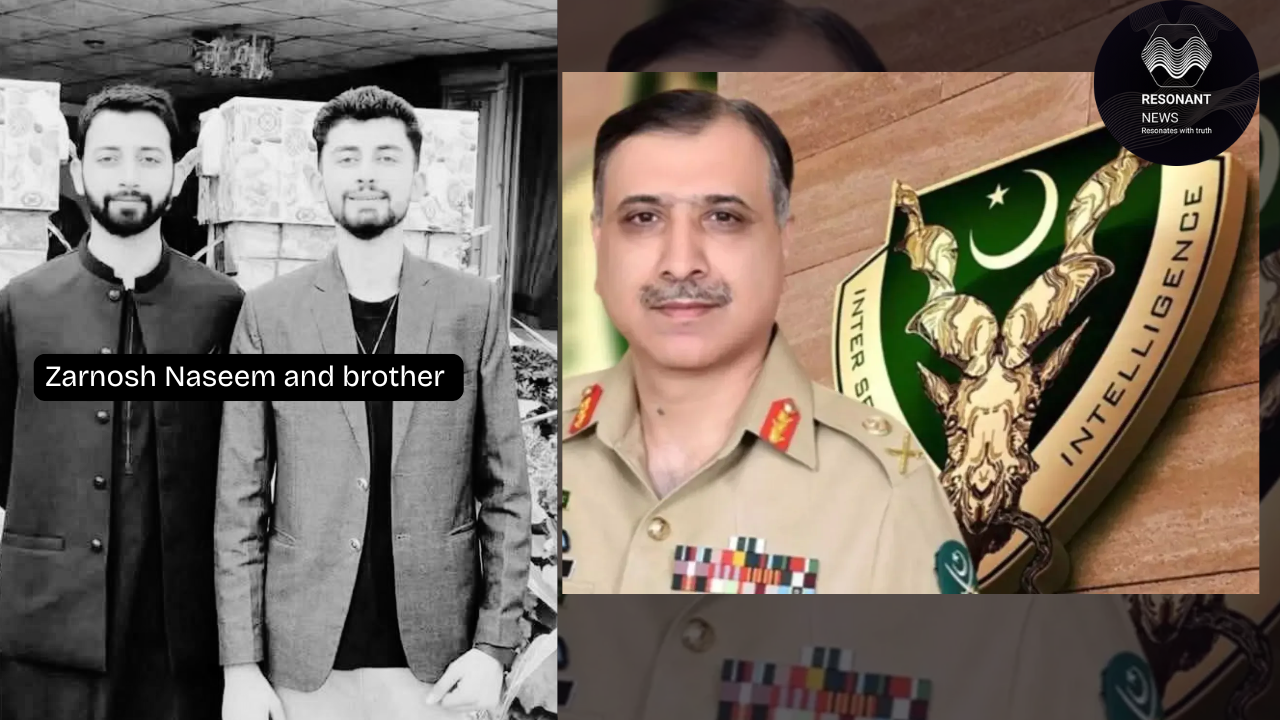

Professor Sajjad Raja, head of the Jammu Kashmir Gilgit Baltistan Liberation (JKGBL), has publicly denounced Pakistani agencies for what he describes as extrajudicial killings aimed at concealing their covert operations in Pakistan-Occupied Jammu and Kashmir (PoJK). In a powerful statement, Raja accused the authorities of murdering Zarnosh Naseem and his brother to silence them, alleging that the killings were motivated by Naseem’s knowledge of the agencies’ illicit activities. The accusations have intensified scrutiny on Pakistan’s actions in PoJK, raising serious concerns about human rights violations in the region.
The Case of Zarnosh Naseem
Raja claims that Zarnosh Naseem, a resident of PoJK, was previously linked to the Pakistan-supported Jaish-e-Mohammed (JeM), a known terrorist organization. Three years ago, Naseem reportedly left JeM, seeking to live a peaceful life. However, Pakistani agencies allegedly falsely associated him with the Tehrik-i-Taliban Pakistan (TTP) to justify his killing. According to Raja, Naseem’s decision to abandon militancy and his refusal to comply with the agencies’ orders made him a target. “Zarnosh wanted a peaceful life, but he knew too much about the dirty deeds of Pakistani agencies,” Raja stated.
The JKGBL leader further alleged that Pakistani agencies had provided Naseem with a list of PoJK nationalists targeted for elimination due to their opposition to the agencies’ activities. Naseem’s refusal to carry out these assassinations, Raja claims, led to his extrajudicial killing along with his brother. The act was purportedly intended to prevent Naseem from exposing the agencies’ secretive operations.
A Call to End the Silence
Raja vowed that the JKGBL would not remain silent in the face of what he called a “genocide” of PoJK’s youth by Pakistani agencies. “We will not stay quiet against these extrajudicial killings meant to cover up their dirty secrets,” he declared, signaling a commitment to seek justice and accountability. The accusations point to a broader pattern of alleged human rights abuses in PoJK, including enforced disappearances and the suppression of dissent against Pakistan’s administration.
Regional and Political Context
The allegations emerge amid ongoing unrest in PoJK, where local activists and groups like the JKGBL have long criticized Pakistan for marginalizing the region’s population and exploiting its resources. The reported killings of Zarnosh Naseem and his brother highlight the dangers faced by individuals who challenge state-backed militant groups or intelligence operations. The alleged fabrication of TTP ties and the targeting of nationalists underscore the complex interplay of militancy, state control, and resistance in PoJK.
Implications for PoJK
Raja’s accusations amplify calls for international attention to the human rights situation in PoJK. The claims of extrajudicial killings and the silencing of those aware of covert operations raise critical questions about transparency and governance in the region. As the JKGBL continues to advocate for the rights of PoJK’s residents, the case of Zarnosh Naseem serves as a grim reminder of the challenges faced by those who oppose Pakistan’s authority in the disputed territory. The incident underscores the need for accountability and justice to address the region’s ongoing struggles.

Leave a Reply