
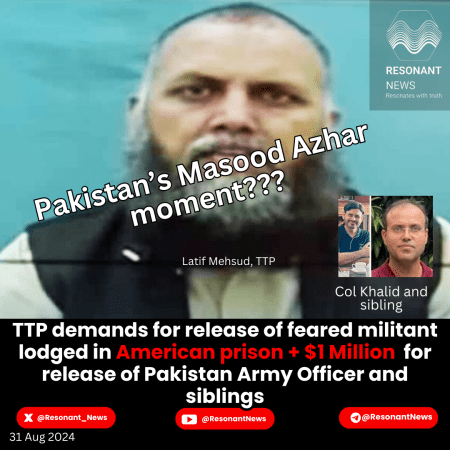

The Tehrik-i-Taliban Pakistan (TTP) has made a bold and alarming demand: the release of a feared militant, Latif Mehsud, currently lodged in a U.S. prison, along with a ransom of $1 million in exchange for a kidnapped Pakistani Army officer. This situation draws a stark parallel to a similar incident from 1999 when India was forced to release a terrorist following a hijacking.
TTP’s Hostage Situation
On August 28th, TTP militants kidnapped Colonel Khalid, a Pakistani Army officer, along with his two siblings from a mosque. The TTP is now using this hostage situation to negotiate the release of Latif Mehsud, a militant of significant repute, currently held in an American prison. The demand also includes a hefty sum of $1 million.
Who is Latif Mehsud?
Latif Mehsud is a prominent figure associated with the TTP and the brother of a key TTP leader. He was arrested by the U.S. Army in 2013 during an operation in Afghanistan. A year later, in 2014, he was extradited to Pakistan, but reports confirm that he remains in a U.S. prison. His potential release is a major point of concern for both the Pakistani Army and international security agencies, given his strong ties to terrorism.
The Pakistani Army is reportedly hesitant to release Latif Mehsud, mirroring India’s reluctance to release Jaish-e-Mohammed leader Masood Azhar in 1999. After the hijacking of Indian Airlines Flight IC-814, India was forced to release Azhar to save the lives of the hostages. The decision came with dire consequences; Masood Azhar went on to orchestrate several terrorist attacks on Indian soil, including the infamous 26/11 Mumbai attacks and the Pulwama attack.
TTP has also demanded release of 3 other militants–“Muslim Bagh, Azam and Nasrullah Mehsud”, in exchange for the release of the hostages
The Shadow of IC-814 Hijacking
The hijacking of IC-814 remains a grim reminder of how the release of a terrorist can lead to future tragedies. The incident involved ISI-backed terrorists hijacking an Indian airline and forcing India to release Masood Azhar, who then became a significant threat in the region. Since his release, Since then Masood Azhar has beenn involved in multiple terrorist attacks on Indian soil including 26/11 and Pulwama attack in 2019.
The current demand by the TTP has put Pakistan in a precarious position. Releasing a militant like Latif Mehsud could have serious ramifications, just as India faced in 1999. The Pakistani Army’s decision remains uncertain, but the stakes are high. This situation highlights the ongoing challenges of dealing with terrorism and the complexities involved in negotiating with militant groups.
The world watches closely as this tense situation unfolds, waiting to see how the Pakistani government and military will respond to the TTP’s demands. The outcome will likely have far-reaching implications, not only for Pakistan but for regional security as well.


Leave a Reply